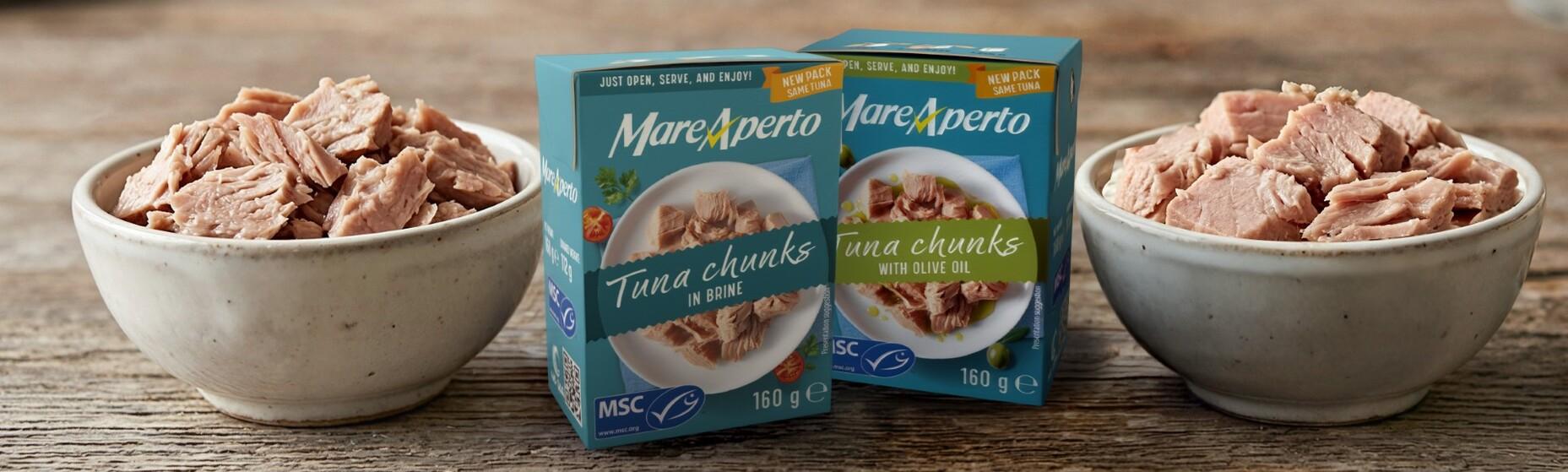
A cardboard box instead of a steel can
Is there a substitute for a tin can? It seems there isn't. And why bother, you might ask. But if you think about it, despite all its advantages, this packaging isn't without its drawbacks. These drawbacks become apparent as soon as an interesting alternative appears: a cardboard box.
This is the packaging that replaced the traditional tuna cans used by Tetra Pak and Jealsa. The new packaging is already available in Sweden, and other European markets are slated to follow soon. But what are its advantages?
The first and far from least advantage is the ability to stand out on shelves alongside the traditionally round cans, thereby attracting customer attention. Furthermore, the rectangular shape is more convenient and compact for logistics and shelf storage, which is also much better suited for information and design. Finally, the carbon footprint is reduced by over 80%.
And of course, this packaging is recyclable. The box is 71% paper, with the remainder being a polymer-aluminum barrier layer that is separated from the cardboard during industrial recycling.
The new packaging has been very well received by consumers, and manufacturers plan to roll it out to other tuna products as the category develops.
Materials from the website tetrapak.com were used.